

Library
Preservation
Other Area Railroads
& Historical Societies
We Are Dedicated To
Friends & Links














President's Message
As one chapter ends, another begins. I am pleased to introduce the Ontario & Western Railway Historical Society's revamped newsletter, The Ontario Express. It replaces the Mountaineer Newsletter, and is now anchored by our new Editors; Ron Vassallo, Mal Houck, Doug Barberio and Bob McCue. Former Editors Joe & Joselynn Myers, who have held those positions for many years, have done an outstanding job with the Mountaineer Newsletter. A big thank you goes out to them. I'm sure the Society appreciates their time, effort and service to the continuance of the newsletter. I also must thank our new Editors for stepping up to take on the challenge of bringing informative and entertaining articles to our members in this traditional form.
I have not been privy to the new look of this newsletter, but with the inclusion of images, I am sure the changes will add an extra dimension to the presentation, and be well received by the membership. I'm excited to see this first edition. As former Editor Joselynn Myers always said, this is YOUR newsletter; a forum by which you, the member, can input articles suitable for this media. So, don't be afraid to contribute to it.
The Summer of 2011 has been a hot one here in the Northeast. My wife was able to take some time off and travel, so travel we did in mid July. Our trip was wonderful, and always too short. I hope all of you have been able to do some traveling this summer, or plan to do so shortly. Speaking of travel, our 2011 Observer, the final Trip Guide is in the process of layout and printing. This is the sixth and final Trip Guide written by our travel "Gurus" Bill Scott & Charlie Breiner, and will cover the O&W's Northern Division, from Munns to Oswego, including the Rome Branch and Utica Division. Think about it; six trip guides written by these men. Where has the time gone?
By now, you should have received the 2010 Observer, Center Cabs and Kitchens, written by member Mal Houck. I'm sure you'll agree it was worth the wait, and I thank all of you for being so patient. Mal, John Taibi (layout) and Carl Ohlson (Publications Coordinator) hit this one "out of the park", as it is a fantastic summer read. My heartfelt thanks goes out to them as well. Not bad for a Society run 100% by volunteers.
With regard to the relocation of the Mulberry House Senior Center, our current meeting location, plans are still underway for the move to take place in the coming weeks. I have no updated information as yet, and it is very conceivable that the September meeting may be held in the same location. All I can say is stay tuned to our Web Site, the O&W Yahoo discussion group and the O&W Facebook page for updates on that eventual move.
When we do meet in September, nominations for Officers and Trustees will be open through the October meeting. I urge all those members who live in and around the Middletown, NY area to consider becoming active in either an elected or non-elected position. Elected for one year terms are the offices of the President, Vice President, Treasurer and Recording Secretary. Trustees terms run for two or three years, so some terms will expire at the end of 2011.
Finally, I wish all of you a great rest of the summer, and hope to see many of you at our next meeting and the Annual Convention in November.
George S. Shammas
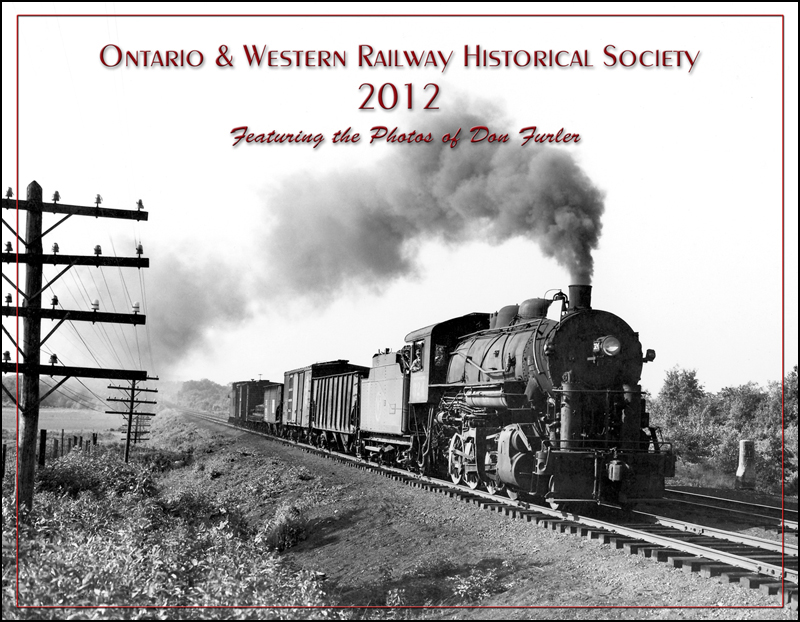
On Sale Now at the Sales Page!
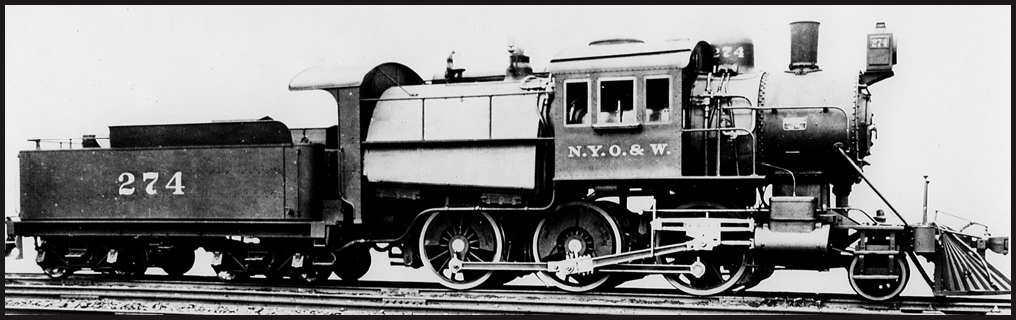
"Center Cabs and Kitchens--Double Cab Locomotives of the NYO&W."
©
1997 - 2011 Ontario & Western Railway Historical Society, Inc. The O&WRHS is
a 501 (c)3 Non - Profit Historical Group,
Chartered on July
28, 1978 by the Board of
Regents, State of
New York, on behalf of the State Education Department.